

From Vision to Space: How a Place for Change and Innovation Came to Life at Novartis
On the Novartis campus in Basel, the future is shaped, in labs, test tubes, and in interdisciplinary dialogue among bright minds from around the world. However, innovation does not only arise from experiments; it emerges from exchange, shared curiosity, questioning and from leaving well‑worn paths behind.
Amid a complex renovation of a campus building, a special place was discovered: a two‑storey space on the roof of the building. Until then merely functional, yet full of potential. From the project’s steering group came a vision that went far beyond classic design and occupancy planning:
We need a place that brings us back together.
Where do we actually meet – beyond meetings and microscopes?
Where can we be creative by breaking free from the silos of our departments?
The architects from Burckhardt Architektur AG, leading the renovation, recognized early that this place needed more than good design: they asked for meaning and purpose. That is where theLivingCore came in with its Enabling Spaces® expertise, turning spaces into spaces of possibilities. Our primary focus was the organizational, cultural, and epistemological (knowledge) spaces as a means to foster collaboration and creative processes. The goal: to develop a creative collaboration space that promotes interdisciplinary collaboration, innovation, and human connections.
The Path: Enabling Spaces Approach & Co‑Creation
Together with user representatives and Burckhardt Architektur, theLivingCore conducted interviews and workshops, and analysed the potential of the space. This yielded a deep understanding of current and future needs in research and daily work at Novartis:
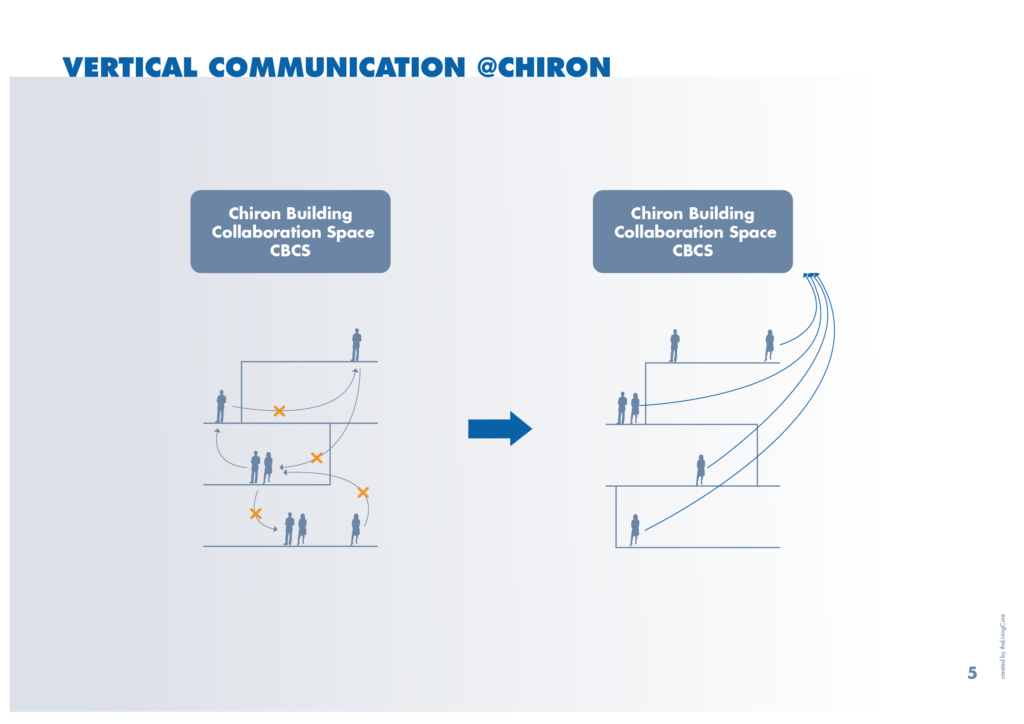
- A longing for personal encounters despite physical proximity.
- Virtual meetings as the new norm, yet often unsatisfying.
- Breaking down departments and silos.
- A desire for spaces where efficiency and productivity are not the first priority.
- Room to think, explore new solutions, and create new knowledge.
- A wish for retreats and informal meeting zones.
- The desire to work in creative settings.
The Result: The Chiron Building Collaboration Space
From this multi‑layered perspective, a space was conceived that is more than a lounge or a meeting room and that does not merely reflect current needs: it became a living ecosystem of functions, formats, and spaces with different atmospheres and uses, designed for the future and innovative capacity of Novartis:
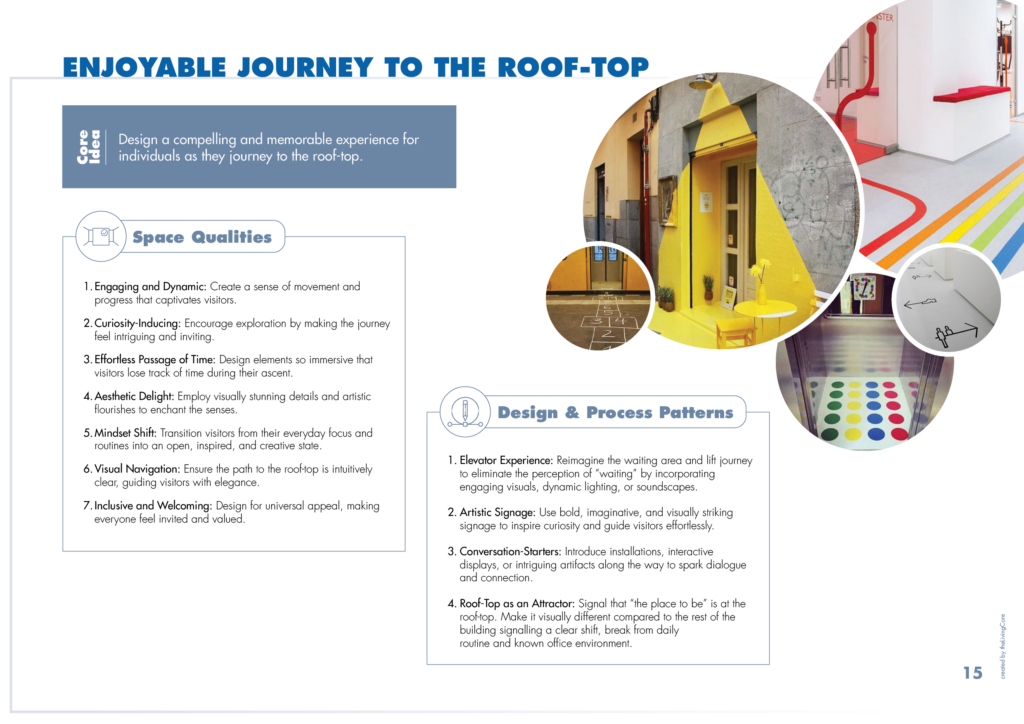
- Roof‑Top Terrace: Panoramic views, connection to nature, and outdoor activities – from urban gardening and BBQs to quiet retreats.
- Lunch Arena: A place to eat and adaptable for town hall meetings, “Lunch & Learn” formats, and spontaneous encounters – complete with the “best coffee in town.”
- Creative Space: Modular, with writable walls, workshop kits, and flexible furniture – reserved exclusively for collaborative innovation formats.
- Study & Revitalizing Spaces: Places of quiet, regeneration, and focus. A counterpoint to the efficiency‑driven everyday.
- Chat, Conversation and Activity Niches: For informal conversations, small‑scale co‑creation, or shared rituals such as birthday gatherings or piano sessions.
- Relating Space: A curated zone where ideas, projects, and stimuli are made visible – by colleagues, for colleagues.
This ecosystem is not a mere sequence of isolated space typologies; it is shaped in such a way that they naturally complement each other and form an organic whole, where Novartis can carry out its future‑oriented work.
Impact: Space as a Cultural Catalyst
The Chiron Building Collaboration Space is already seen as a cultural catalyst. It:
- breaks down silos and fosters interdisciplinary encounters,
- opens spaces for reflection, innovation, and purpose,
- strengthens emotional ties and personal encounters at work,
- creates a stage for visibility, communication, and connection,
- changes how collaboration happens at Novartis
- has become a space where creative and future-oriented work can happen.
So, an unused area became a place that connects, inspires, and encourages creative work. It invites novel, future‑oriented ideas, new relationships, and a new way of working together.