

At a glance
- The client is a medical university, the Medical University Graz.
- The rectorate decided to reposition the university, create a new identity, and start a future-oriented transformation process, leading to well-reflected and responsible staff and students, the creation of spin-offs, and recovered patients.
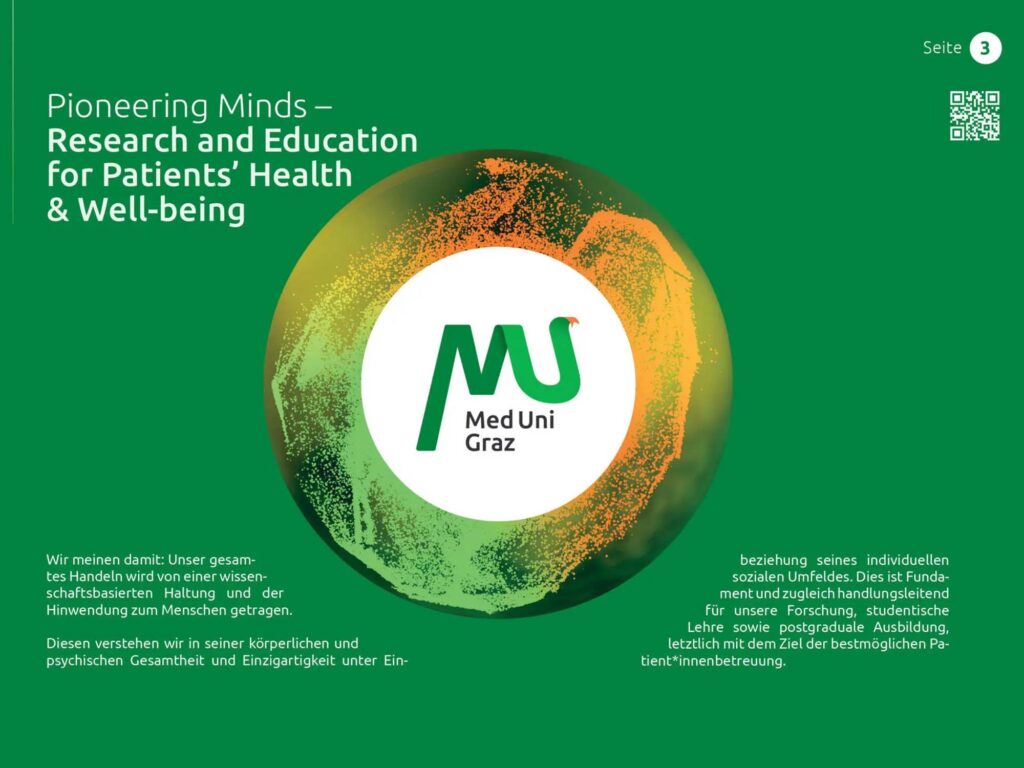
- Based on the claim of “Pioneering Minds – Education and Research for Patients’ Health and Well-Being”, theLivingCore has created the future-proof profile of the medical university. Further, we developed future-oriented organizational processes and structures as well as laid the foundation for multiple transformation initiatives, bringing the new positioning to life.
- Medical University Graz has adopted the new positioning and started a transformation process leading to the creation of a medical science innovation hub. The insights and results from our collaboration have already started influencing strategies beyond the Medical University of Graz, how universities should approach the topic of innovation, and the creation of spin-offs (as part of their third mission).
At the beginning of our project with the Medical University in Graz, a young researcher told us in an interview:
I work at a university, and what bothers me is that I want to have the freedom to explore things that I do not know and deal with challenging questions, but in reality, I have to focus on scientific trends and follow them. Everyone is thinking about AI, machine learning, CRISPR, and so forth. A lot of my energy goes into the publishing hassle and dealing with department politics. How do I fit in? Am I doing everything right, according to the procedures? There is so much politics in science, it almost makes you forget what you are doing it for…
This researcher was not alone with his thoughts, and the university’s leadership took it as a challenge to create a new kind of education and research atmosphere. Also, universities are urged to be more successful in terms of fulfilling their third mission and become more autonomous financially. This conundrum led to the first question our client asked us:
At a time when universities are increasingly driven to conform to prevailing trends and economic pressures, how can we create an environment that encourages people to dare to try new things and explore novelty?
Competing with academic powerhouses like London, Graz, like any other medical university in Austria, faces an uphill battle for recognition. This led to the client’s second question:
How can a rural university like Graz use its location to compete with such giants? How can we, as an institution, follow the necessary procedures and policies of science while at the same time fostering a distinctive niche and developing a unique positioning?

Three strategic steps to shaping a university’s unique identity and spaces
The Medical University of Graz commissioned theLivingCore to develop such a profile in a process of co-creation. The process was structured in three phases:
1. Understanding the status quo
We began our project with a deep dive into the current state of affairs at The Medical University of Graz. We conducted surveys, ethnographic observations, qualitative interviews, and on-desk research.
We see this phase as an integral part of the transformation process already. For example, in generative interviews with different stakeholders, we explore issues, potentials, possible future developments in a highly personal and engaging way and, by that, involve them actively in inspiring positive change.
The goal of this phase was to deeply understand the academic, geographic, economic, and social context and to learn about the university’s internal processes, structures, cultures and narratives. This, in turn, helped us in uncovering hidden potentials that we would use in a next step to create a connectable, relatable, and future-oriented profile for the university.

2. Sense-making and developing a unique positioning
In this phase, we integrated and made sense of the vast amounts of quantitative and, more importantly, qualitative research data from the first phase and identified themes and potentials that connect the legacy of the university with a promising future. The outcomes of this work are condensed in a so-called “core process model”.
Future core processes describe the essential, strategic actions an organization must take to fulfill its purpose. They are created in close collaboration with our clients.
Based on the research findings and the newly created core processes, we developed a roadmap to reshape the university’s identity, secure its unique positioning, and set the direction for its implementation.
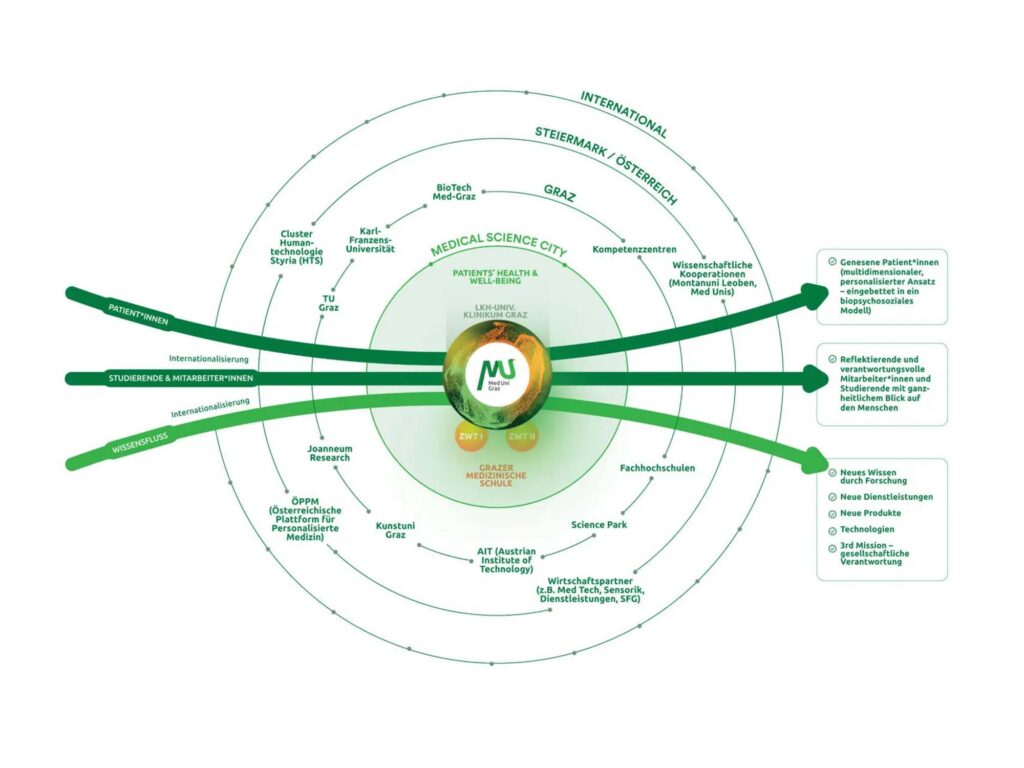
Med Uni Graz: Pioneering Minds – Education and Research for Patients’ Health and Well-Being
The above profile describes the new positioning of the Medical University in Graz. It is inspired and guided by a holistic view of the human being, taking into account its biological, psychological, and social dimensions, thus broadening the scope of the medical and educational approach.
It guides the medical staff in their daily work: in patient care, teaching, and in interdisciplinary basic and applied research. In this way, the work of the staff has a direct social and economic impact in the region and beyond.
3. Bringing the new identity to life
How do you bring a new positioning to life? How do you make it more than just a tagline on the letterhead? The rectorate of the Medical University of Graz took on this challenge and, together with us, defined three “transformation streams.” These are meant to ensure that the new positioning is genuinely and deeply anchored throughout the entire organization.
The first transformation stream focuses on patient care. The Medical University of Graz expands its scope of action by adding the concept of “well-being” to its medical approach. It is no longer “only” about proactively keeping people healthy or making them healthy, but about recognizing that the real task is sometimes to contribute to a person’s well-being — for example, in the case of an incurable illness.
The second transformation stream focuses on students and staff. From the outset, there was the ambition for the university to attract pioneers in every position and profession. Cleaning and administrative staff should have the same opportunity to be pioneers as researchers and students.
To this end, the Medical University of Graz redesigned its curriculum and its admissions procedure. Applicants are assessed not only on their intellectual abilities, but also on their empathy and capacity for care. The personal development and flourishing of students and staff is fostered — and this directly benefits patient care.
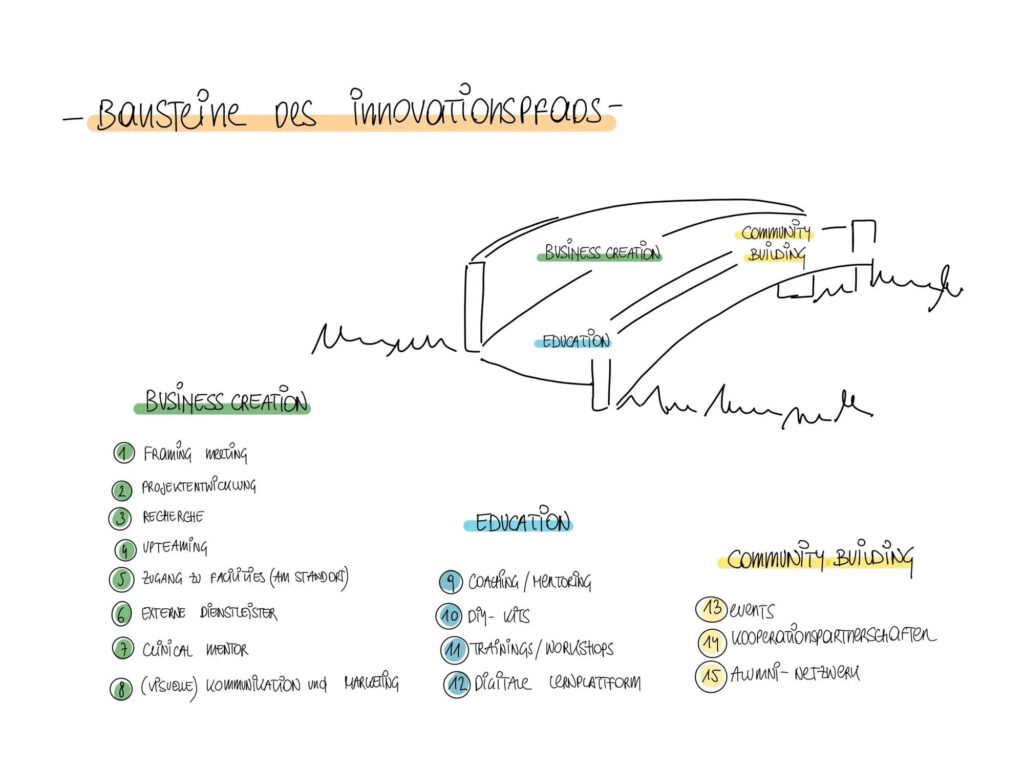
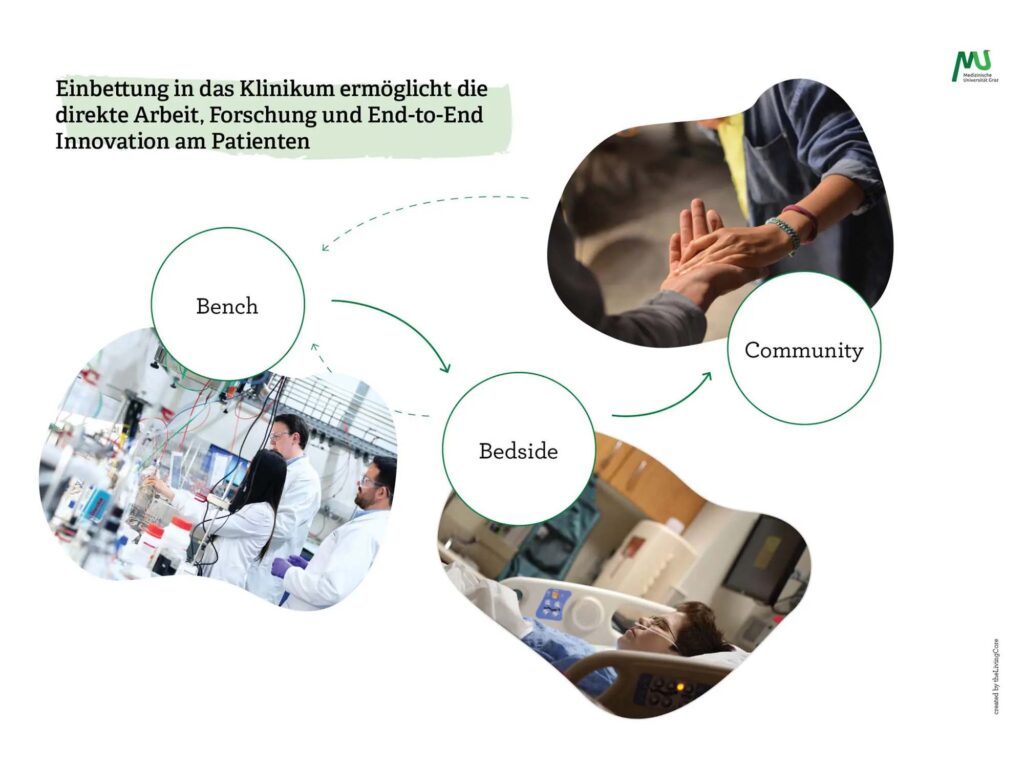
The third transformation stream relates to innovation and knowledge transfer. The aim is to meet the demands of translational research: findings from academic research should benefit society. This means an end to “ivory tower” research and a bridge between basic and applied research (fulfilling the “third mission”).
A key project in this area was the establishment of an Innovation Hub (now known as the Medical Science City Innovation Hub) at the Medical University of Graz, which brings together pioneering researchers, students, and people from other disciplines, and focuses on creating spin-offs that have a direct positive impact on society.
Conclusions and takeaways
Over the years of our fruitful collaboration, the Medical University of Graz has made an astonishing leap forward. It has not only repositioned itself strategically, but also launched new processes and initiatives to bring its new identity to life.
In closing, we’d like to share a few insights from our project that inspired us, and that may inspire you, too.
1. Change your mindset — and your organization’s
The human brain resists change; it is afraid of failure, and it holds cherished beliefs about how things (should) work. “Organizational brains” are not much different. In fact, they are even more stubborn… Yet recognizing and overcoming the organizational patterns of thinking and acting that stand in the way of change is the decisive lever when it comes to lasting change. Easier said than done. That’s why we strongly recommend supporting your employees — and your leaders in particular — in becoming aware of, and reflecting on, their own thoughts, opinions, and beliefs about change. Offer personal coaching as well, and put organizational structures in place to establish new, change-oriented habits.
In many projects, we find that this is an aspect of the transformation process that gets neglected — and, conversely, one that prevents lasting change if you don’t focus on it.
2. Design a future that respects the past
This is the path to lasting change. In the case of the Medical University of Graz, for example, we chose to prioritize meaningful and sustainable social impact over the sheer number of newly founded spin-offs. This is in keeping with the history of Austrian universities, which have always been humanistic in character. We drew on this strength to set a clear direction for the future.
3. Cultivate a Future-Oriented Mindset
It is crucial to foster a future-oriented way of thinking and to ensure that the people essential to the project’s success drive the new positioning forward. Solo efforts by a few are doomed to fail — especially in a complex organization like a university. Invest your time right at the outset in “stakeholder mapping”: identify the various roles you need and develop suitable methods for involving stakeholders. For this, we developed a “stakeholder mapping game” that lets you develop, monitor, and — where necessary — adjust your stakeholder-engagement strategy.
4. Measure results, but differently!
Adjust your evaluation systems so that impact and excellence are measured not only by traditional metrics — such as the number of publications — but also, for example, by tangible effects in society. Taking the first step and being different can be hard, but positive examples always inspire change across the ecosystem. And the results of our project are already being used as a model for a successful shift in how Austrian universities work.
5. Perseverance is the key to success
Finally, it’s about staying the course in the face of challenges. This is an essential prerequisite for realizing and sustaining a unique identity. Just as an airplane needs air resistance to take off, a new identity comes into being as people overcome challenges and make meaningful decisions.
Did this project inspire you to think about the future of your own organization? Do you have questions about how these findings might be relevant to your work? We invite you to book a short introductory call with our founder, Thomas Fundneider. Simply use the form below to find a convenient time.