
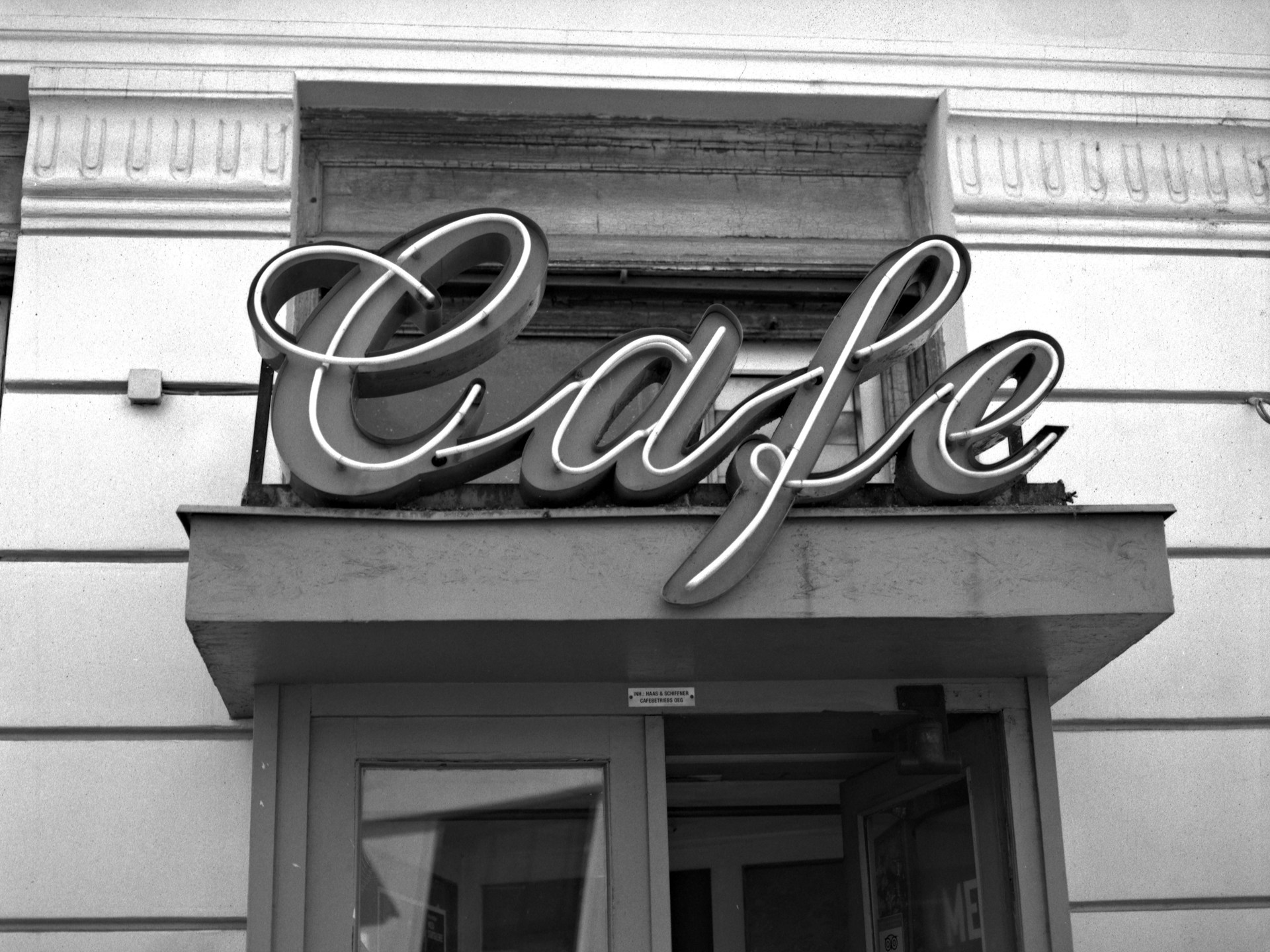
What lies at the core of a coffee house? We look at it as a place where the new comes into being: as an Enabling Space in which leisure, retreat, and conversation create precisely those qualities that organizations so often try, in vain, to plan for. Part 1 of 2.
Unhooking from a daily life that is hectic, restless, and busy to the point of absurdity, and yet at the same time “being in the world and in resonance with the world” — arriving at a place of hospitalité, of deep conversation and dialogue, in a retreat for the mind, where it can come to rest, recover, and open up. Open up to the new, and to taking up new perspectives on the world and on oneself.
In a hurried, profit-driven society, the longing for a “slow space” is greater than ever — for a place in which slowness, quiet, and retreat, but also high-quality conversation, allow the new to emerge in and around us. What we have in mind is not a sacred space, but the coffee house as a place of learning, of listening (in)to the world while at the same time being sheltered from it; a place that, precisely through this tension between private and public on the one hand, and between withdrawing and entering into interaction on the other, enables and fosters the emergence of the new — a place as Enabling Space.
Why this occupies us: in our work with organizations we keep encountering the same order — innovation, please, but plannable, with milestones and a dependable result. The wish is understandable, and at its core it cannot be fulfilled. What is genuinely new cannot be manufactured; it can only be enabled. That is exactly why places interest us at least as much as methods do. And in this respect the coffee house is a remarkably precise teacher: for three hundred years it has been doing, almost in passing, what companies today set up programs for.
In this first part we explore what learning most fundamentally is — and why the coffee house offers better conditions for it than the modern open-plan office. Part 2 then turns to the quality that underlies all of this: Muße, that contemplative leisure for which English has no single word. And to the question of why it so stubbornly resists imitation inside organizations.
Why the core interests us
We — the authors — are concerned with the core. With the essence of things, both in organizations and in larger social units (e.g., urban structures). In this article we want to pursue the question of what constitutes the core of a coffee house — and to do so from a particular perspective: we examine the coffee house as a place in which the new can emerge, in which learning takes place and new knowledge is generated.
Before we turn to the coffee house itself, then, we need to make a brief excursion into the field of learning and knowledge generation.
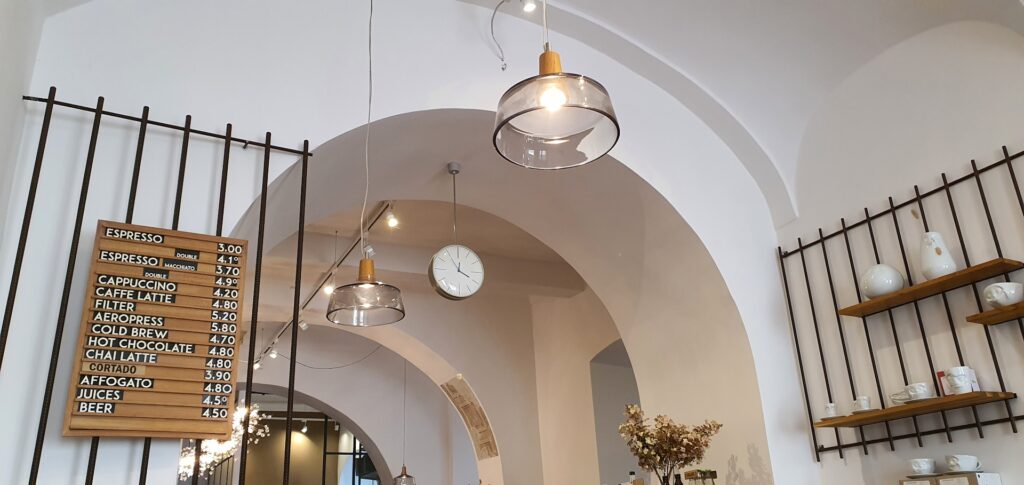
Learning means: friction with reality
At its deepest, learning is about the transformation of knowledge. Over the years, all of us have developed a particular picture of the world in order to be able to act successfully in everyday life. We have learned, for example, to hit the brakes automatically when a deer jumps into the road while we are driving.
In contrast to such routine processes, the more pleasurable variety of learning consists in bringing forth the new. Having an idea, or an inspired thought — a mysterious process that wants to be cultivated. It lies in the nature of the new that, if it is truly profound, it begins to determine our picture of the world and wants to be brought into the world. This happens — figuratively speaking — in a process of “friction between the new and reality,” similar to the learning process in an experiment. The new is exposed to its surroundings (e.g., by talking about an idea, trying it out, testing it), and we experience the reaction of people, of the environment, and so on.
This interaction can be physically painful: a small child walks into a glass door because it has not yet experienced the concept of “transparent and a wall at the same time”; its picture of the world changes radically in precisely that moment — it “learns.” But it can also be emotionally painful: think of moments in your own life in which you had to give up long-practiced “mindsets” because you came to see that they no longer held true — or never had.
This can be compared to a “key-and-lock metaphor” (cf. von Glasersfeld 1995): our mentally constructed key fits — or precisely does not fit — the lock of reality. It is evident that these processes do not play out exclusively inside our heads; rather, a permanent exchange takes place, an interaction, a dance between our own cognitive system and its surroundings. The spaces that surround us are both physical (architecture) and — in many cases more important than built space — social, emotional, and cultural in nature.
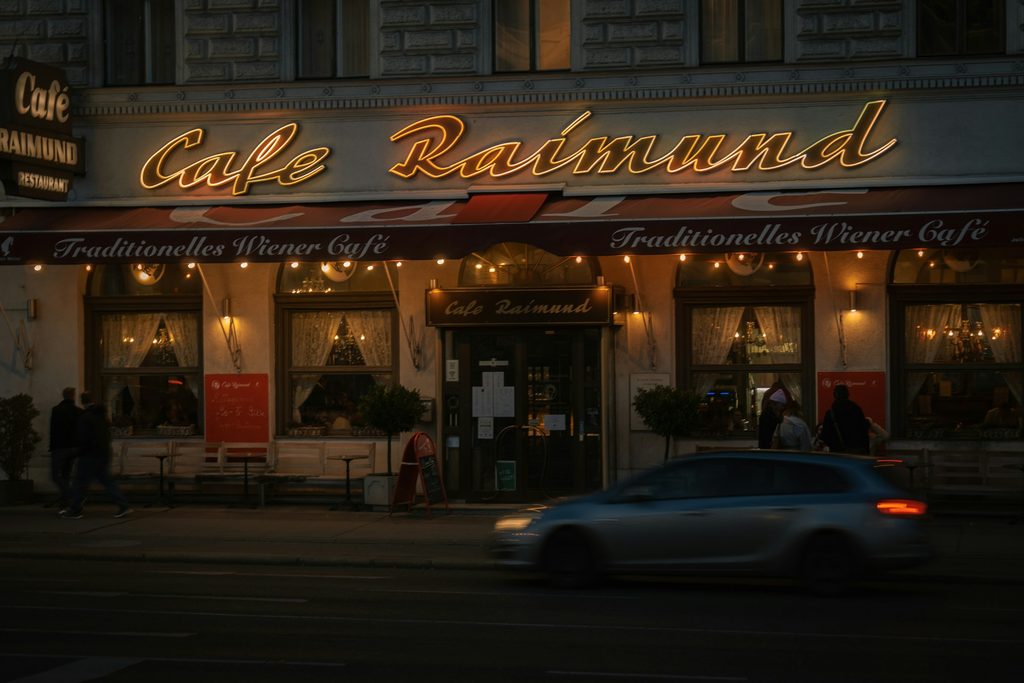
The coffee house as an interface between private and public
The coffee house offers a semi-public space in which one can, on the one hand, withdraw, and in which one also finds, on the other, the friction with reality that learning and the generation of new knowledge require. It is a place of knowledge and a place of learning in that it makes available a fluid interface between privacy and publicness. It extends private space into the public realm, and public space into the private.
Several dimensions are involved here: the physical extension of the coffee house through the appropriation of public surfaces such as sidewalks and squares. Above all, however, the social and emotional dimension, which Gregor Eichinger has so aptly described as “being alone with oneself in company”: deciding for yourself whether to withdraw into a niche, “invisible,” taking an introverted stance or the role of observer, or whether to sit at the center of the room — without compulsion, but with possibilities for interaction.
The coffee house, then, as a place of learning. This was, incidentally, already the case in the past. One need only think of the many dialogue circles, or of the widely known literary cafés in which scientists, artists, writers, and entrepreneurs conceived and tested futures without the corset of disciplinary boundaries.
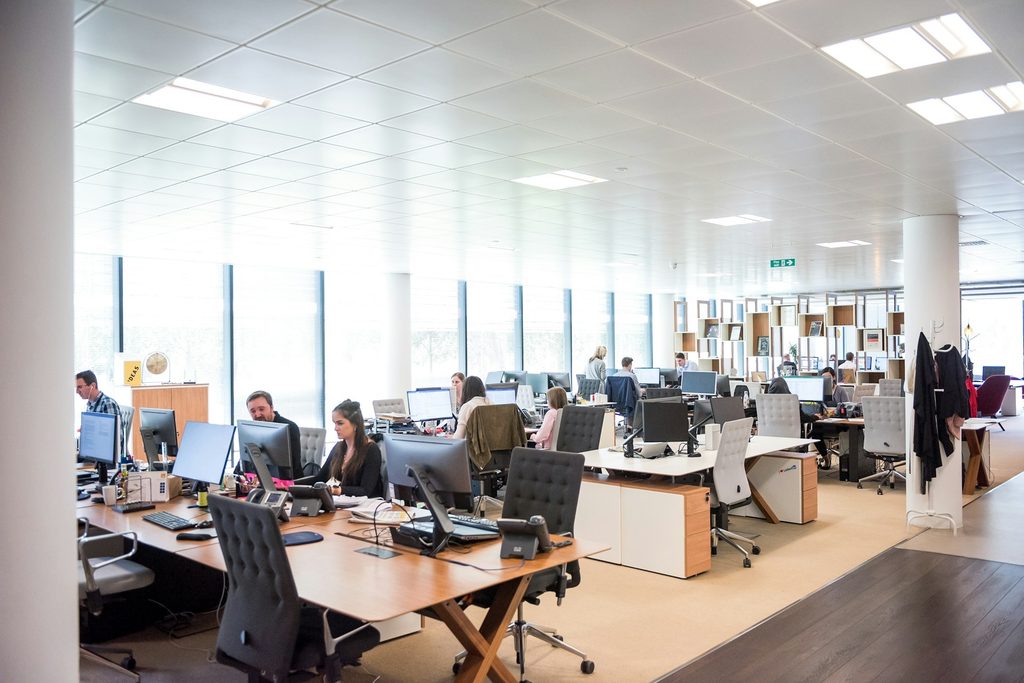
Change of scene: can the new emerge in the open-plan office?
The modern open-plan office. Can learning happen here? Can the new emerge here? How is the interplay between privacy and publicness handled — the very interplay that is so essential to the process of learning and knowledge generation?
Evidently not in a satisfactory way, as surveys in companies that have switched to modern shared-office concepts show — and as the film “Work Hard, Play Hard” also intimated. When all that remains is communicating: who, then, is actually still thinking? Who has the time and the leisure to expose themselves to the risk of the new? Employees’ desire for more privacy in the office is impossible to miss.
What many modern offices lack is an emotional zone of safety of the kind the coffee house provides so charmingly: the coffee house as a knowledge workplace, as an “open-plan office” — without one ever noticing that it is a workplace at all.
What, then, accounts for this difference between the open-plan office and the coffee house as a place of knowledge work?
To be continued
The answer has to do with a quality that appears in no project plan and that artists and monks have long known: Muße — contemplative leisure. In Part 2 we pursue it — and with it the question of why the hip coffee lounge inside the corporation cannot, after all, replace the coffee house.
Until then, a question to take with you: when did something genuinely new last occur to you at work — and did it happen where you had planned for it?
If you do not want to miss Part 2: subscribe to our newsletter — once a quarter, positions, method insights, and perspectives from our work with organizations in transformation. And if you would like to know right now how these considerations translate into your own context, write to us at welcome@thelivingcore.com.
References
- Clark, A. (2008). Supersizing the mind. Embodiment, action, and cognitive extension. Oxford, New York: Oxford University Press.
- Glasersfeld, E. v. (1995). Radical constructivism: a way of knowing and learning. London: Falmer Press.
- Kao, J., Nonaka, I., & Scharmer, C. O. (2000). The seventh career: building an innovation keiretsu. Conversation with John Kao (The Idea Factrory). Retrieved from http://www.dialogonleadership.org/Kao-2000.pdf (date of download: 21.09.2005)
- Peschl, M. F., & Fundneider, T. (2012). Spaces enabling game-changing and sustaining innovations: Why space matters for knowledge creation and innovation. Journal of Organisational Transformation and Social Change (OTSC), 9(1), 41–61.
- Pieper, J. (1965). Muße und Kult (7th ed.). München: Kösel.
Images / Part 1
- Featured image by Lukas Lehotsky / Unsplash
- Image 1: Aleksandr Filippov / Unsplash
- Image 2: Marcel Schachinger / Unsplash
- Image 3: Arlington Research / Unsplash
Images / Part 2
- Featured image by Johan Mouchet / Unsplash
- Image 1: Vitaly Gariev / Unsplash
- Image 2: Tingey Injury Law Firm / Unsplash
- Image 2: “Café Griensteidl” (1896) by Reinhold Völkel. Public domain via Wikimedia Commons.
- Image 3: CJ Dayrit / Unsplash
- Image 4: Markus Winkler / Unsplash
The original text appeared in: Peschl, M. F. & Fundneider, T. (2012). Die Muße küsst im Kaffeehaus. Brutstätte der Zukunft und Ort der Begegnung mit dem Neuen. In MAK & departure (Eds.), Das große Wiener Kaffeehaus-Experiment (pp. 49 ff.). Vienna: Metroverlag. The version published here has been revised, split into two articles, and given a new title; in substance it corresponds to the original. The German version was translated into English with Claude Opus 5.